need a new car? rent to own cars no credit check ...
November 17, 2026
1:50 pm

2025 jeep wrangler price one might not want to miss!...
November 17, 2026
1:44 pm
Leonid Meteor Shower Peaks Tonight: When to Look in the US
November 17, 2026
13:51
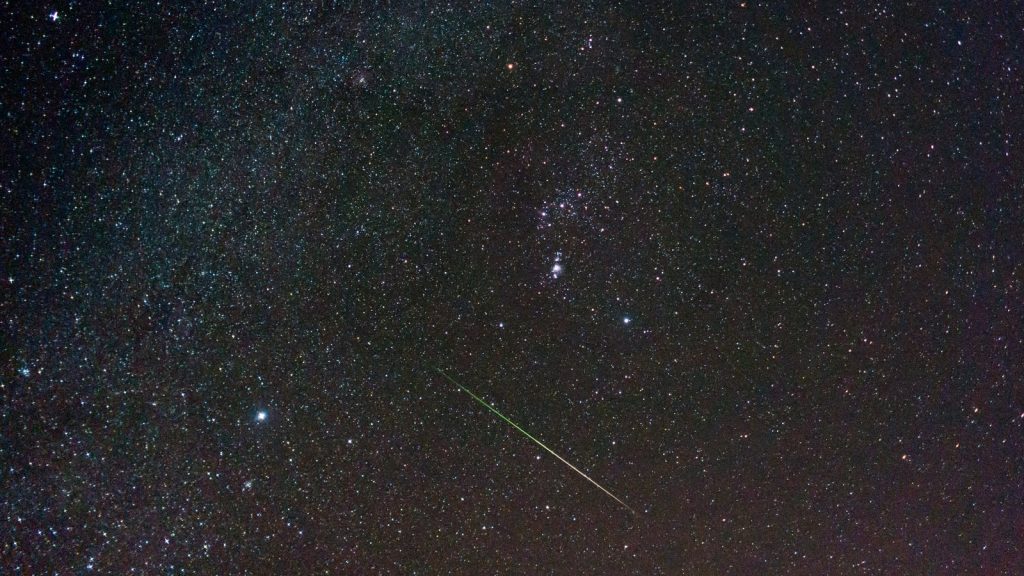
The Leonid meteor shower reaches its calculated peak tonight, at 23:45 UTC on Tuesday, Nov. 17, according to the International Meteor Organization’s 2026 calendar. That is 6:45 p.m. Eastern, too early to see much, so most of the US should watch between moonset and first light on Wednesday morning.
Expect a modest show. The IMO puts the zenithal hourly rate at about 15, a div that assumes a perfectly dark sky with the radiant overhead.
The American Meteor Society warns that ZHR “is not the number most observers will actually see”. NASA’s Leonids page says rates are often as low as about three an hour.
Recent Posts

want an suv with easy access and comfort for seniors? here’s how to get it!...
November 17, 2026
1:30 pm

drive into the future with the 2025 subaru forester...
November 17, 2026
1:42 pm
explore the 2025 jeep compas: adventure awaits!...
November 17, 2026
1:41 pm

celebrate the holidays in a new hyundai palisade...
November 17, 2026
1:43 pm
What the Leonids lack in numbers they make up for in speed. NASA puts them at about 44 miles (71 km) per second, and the IMO’s 2026 table lists no faster shower. Each streak is a speck of comet dust burning up high in the air. Rocks that survive the fall are meteorites, like the 4.1-billion-year-old Martian sample we covered last month.
Every Leonid seems to fly out of one spot in the constellation Leo, called the radiant. EarthSky says that point rises around midnight and climbs highest by dawn. At 6:45 p.m. ET it is still below the horizon for the whole country, so few meteors can reach your sky.
The moon is the other problem. It reached first quarter at 6:47 a.m. ET on Tuesday, timeanddate.com shows, and it is about 55% lit tonight. A half-lit moon washes out the fainter meteors while it is up.
Recent Posts

explore surprisingly affordable luxury ram 1500...
November 17, 2026
1:22 pm

need a new car? rent to own cars no credit check ...
November 17, 2026
1:34 pm

2025 jeep wrangler price one might not want to miss!...
November 17, 2026
1:26 pm

want an suv with easy access and comfort for seniors? here’s how to get it!...
November 17, 2026
1:26 pm
It sets close to midnight across the US, just as Leo rises, which leaves a dark window of about five hours before dawn.
Sources do not agree on the exact night: NASA and the AMS calendar list the peak night as Nov. 16-17. The IMO’s calculated maximum, which Space.com and EarthSky also use, falls on the evening of Nov. 17.
EarthSky says the hours from midnight to dawn on the mornings of Nov. 17 and Nov. 18 are likely best. If you missed Monday night, the coming pre-dawn hours are your remaining chance near the peak.
Recent Posts

drive into the future with the 2025 subaru forester...
November 17, 2026
1:25 pm

explore the 2025 jeep compas: adventure awaits!...
November 17, 2026
1:36 pm

celebrate the holidays in a new hyundai palisade...
November 17, 2026
1:49 pm

explore surprisingly affordable luxury ram 1500...
November 17, 2026
1:31 pm
We converted the IMO’s peak time to local clocks. We then took moonset and the start of morning astronomical twilight, when the sky starts to brighten, from timeanddate.com’s tables for one city in each zone. Your own times shift by a few minutes depending on where you are in your zone.
| Time zone (sample city) | IMO peak, Tue. Nov. 17 | Moon sets | Sky starts to brighten, Wed. Nov. 18 | Sunrise |
|---|---|---|---|---|
| Eastern (New York) | 6:45 p.m. | 11:55 p.m. Tue. | 5:11 a.m. | 6:46 a.m. |
| Central (Chicago) | 5:45 p.m. | 11:51 p.m. Tue. | 5:06 a.m. | 6:43 a.m. |
| Mountain (Denver) | 4:45 p.m. | 12:06 a.m. Wed. | 5:14 a.m. | 6:48 a.m. |
| Pacific (Los Angeles) | 3:45 p.m. | 12:07 a.m. Wed. | 5:01 a.m. | 6:28 a.m. |
| Alaska (Anchorage) | 2:45 p.m. | 12:38 a.m. Wed. | 6:35 a.m. | 9:14 a.m. |
| Hawaii (Honolulu) | 1:45 p.m. | 1:02 a.m. Wed. | 5:27 a.m. | 6:44 a.m. |
Read across a row and the pattern is the same almost everywhere. Go out once the moon is down, and stop when the sky starts to brighten.
For the lower 48 that is roughly midnight to 5 a.m. local time on Wednesday.
Recent Posts

need a new car? rent to own cars no credit check ...
November 17, 2026
1:43 pm

2025 jeep wrangler price one might not want to miss!...
November 17, 2026
1:43 pm

want an suv with easy access and comfort for seniors? here’s how to get it!...
November 17, 2026
1:23 pm
drive into the future with the 2025 subaru forester...
November 17, 2026
1:29 pm
Anchorage gets the longest dark stretch, about six hours, because sunrise there comes after 9 a.m. Hawaii’s window is the shortest, at under four and a half hours.
The moon will not help later in the week. It is waxing toward the Nov. 24 supermoon, so each night it is brighter and sets later.
The advice from NASA and the AMS is simple and costs nothing. Get as far as you can from city and street lights. Lie on your back, NASA says, with your feet toward the east.
Recent Posts

explore the 2025 jeep compas: adventure awaits!...
November 17, 2026
1:40 pm

celebrate the holidays in a new hyundai palisade...
November 17, 2026
1:21 pm

explore surprisingly affordable luxury ram 1500...
November 17, 2026
1:41 pm

need a new car? rent to own cars no credit check ...
November 17, 2026
1:26 pm
The AMS suggests looking at a clear patch about halfway between the horizon and overhead. You don’t need to stare at Leo itself: NASA says meteors look longer away from the radiant.
Leave the telescope and binoculars at home. The AMS says they “restrict your field of view”, which makes it harder to catch meteors that can appear anywhere. Give your eyes 20 to 30 minutes to adjust, the AMS advises, and keep bright lights and phone screens off while you wait. NASA says your eyes adapt in under 30 minutes.
Budget at least an hour, since at a few meteors an hour a short look can easily come up empty. The AMS notes that light pollution, moonlight, clouds and a low radiant all cut the count. A cold November night also calls for a sleeping bag or lawn chair, which NASA recommends.
Recent Posts

2025 jeep wrangler price one might not want to miss!...
November 17, 2026
1:42 pm

want an suv with easy access and comfort for seniors? here’s how to get it!...
November 17, 2026
1:47 pm

drive into the future with the 2025 subaru forester...
November 17, 2026
1:26 pm

explore the 2025 jeep compas: adventure awaits!...
November 17, 2026
1:48 pm
The Leonids are debris from Comet 55P/Tempel-Tuttle. Ernst Tempel and Horace Tuttle found it independently in 1865 and 1866, NASA says, and it takes 33 years to orbit the sun. Each pass near the sun leaves a fresh trail of dust. When Earth runs through a young, dense trail, the shower can turn into a storm, which NASA defines as at least 1,000 meteors an hour.
| Year | What observers saw | Source |
|---|---|---|
| 1833 | Up to about 2,500 meteors a minute, by one estimate | EarthSky |
| 1966 | Thousands of meteors a minute for about 15 minutes; reports of up to 70 a second in the US Southwest | NASA, EarthSky |
| 1999 | Rates peaked near 3,700 to 4,000 an hour on Nov. 18 | EarthSky |
| 2001 | Two peaks on Nov. 18-19, the second near 3,000 to 3,700 an hour | EarthSky |
| 2002 | The most recent Leonid storm | NASA, AMS |
The AMS says outbursts are strongest when the comet is near perihelion, its closest point to the sun, which is why storms cluster in runs like 1999 to 2002. Space.com notes that this year marks 60 years since the 1966 storm. The IMO says the next perihelion of Tempel-Tuttle is due on May 20, 2031.
Even that return may not bring a storm. The AMS calendar says displays above 100 an hour are possible around 2031 and 2064. It adds that Earth will not meet dense debris again until 2099.
Recent Posts

celebrate the holidays in a new hyundai palisade...
November 17, 2026
1:49 pm

explore surprisingly affordable luxury ram 1500...
November 17, 2026
1:23 pm

need a new car? rent to own cars no credit check ...
November 17, 2026
1:31 pm

2025 jeep wrangler price one might not want to miss!...
November 17, 2026
1:45 pm
Probably not. The IMO calendar lists several weak dust-trail encounters calculated by the modellers Vaubaillon and Sato.
Among them is a trail shed in 1800 that Earth meets at 21:55 UTC on Nov. 18. Vaubaillon’s note says the trail reaches Earth, but the number of meteoroids “will not be sufficient for a significant outburst”.
That moment also falls in US daylight, at 4:55 p.m. ET on Wednesday. EarthSky says scientists do not expect a Leonid storm this year.
The shower stays active until Nov. 30, according to the IMO, so stray Leonids will keep turning up before dawn for two more weeks. The next major shower is the Geminids, which the IMO expects to peak on Dec. 14 at a ZHR of 150, with only a waxing crescent moon in the sky.
Recent Posts
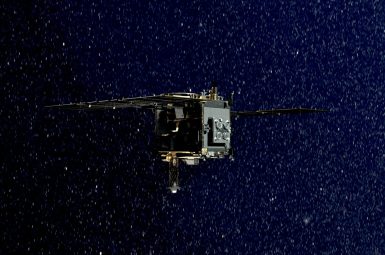
Artist’s rendering of JAXA’s Hayabusa2. Image: DLR German Aerospace Center via Wikimedia Commons, CC BY 2.0 (cropped) Japan’s space agency has dropped Hayabusa2’s 2031 visit to asteroid 1998 KY26, the 36-foot rock whose odd drift...
November 17, 2026
1:55 pm

want an suv with easy access and comfort for seniors? here’s how to get it!...
November 17, 2026
1:47 pm
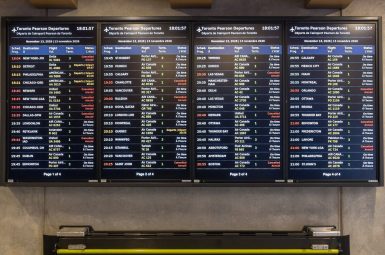
Departure screens for Toronto Pearson on Nov. 13, 2026, during the FAA ground stop, with several flights to US cities cancelled. Photo: Dillan Payne via Wikimedia Commons, CC BY-SA 4.0 (cropped) Two outages hit on...
November 17, 2026
1:54 pm

drive into the future with the 2025 subaru forester...
November 17, 2026
1:38 pm

California Attorney General Rob Bonta in his official portrait (2023). Photo: Douglas Despres, California Attorney General’s Office, via Wikimedia Commons, public domain (cropped) California sues OpenAI in a case about how AI gets tested, not...
November 17, 2026
1:52 pm

explore the 2025 jeep compas: adventure awaits!...
November 17, 2026
1:39 pm

Part of Nvidia’s headquarters campus in Santa Clara, California, seen from beneath the pedestrian bridge over San Tomas Expressway (file image, May 2022). Photo: Dicklyon via Wikimedia Commons, CC BY-SA 4.0 (cropped from a panorama;...
November 17, 2026
1:49 pm

celebrate the holidays in a new hyundai palisade...
November 17, 2026
1:27 pm

A Microsoft Surface Pro sold as a Copilot+ PC, photographed in October 2024. Microsoft’s newest Surface models no longer use the label. Photo: KK IN HK via Wikimedia Commons, CC BY-SA 4.0, cropped A neural...
November 17, 2026
11:54 am
explore surprisingly affordable luxury ram 1500...
November 17, 2026
11:37 am
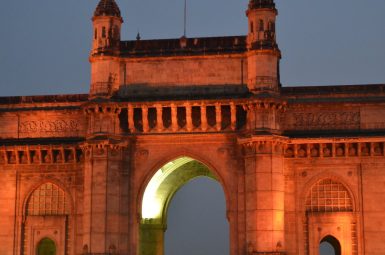
The Gateway of India in Mumbai, the city hosting the 2026 Earthshot Prize. Photo: SriSriChinmaya via Wikimedia Commons, CC BY-SA 4.0, cropped The Earthshot Prize, Prince William’s environmental award, holds its sixth ceremony in Mumbai...
November 17, 2026
11:50 am
need a new car? rent to own cars no credit check ...
November 17, 2026
11:25 am