


celebrate the holidays in a new hyundai palisade...
January 28, 2025
12:46 pm

explore surprisingly affordable luxury ram 1500...
January 28, 2025
12:57 pm
Prehistoric 66-million-year-old vomit discovered in Denmark
January 28, 2025
13:00
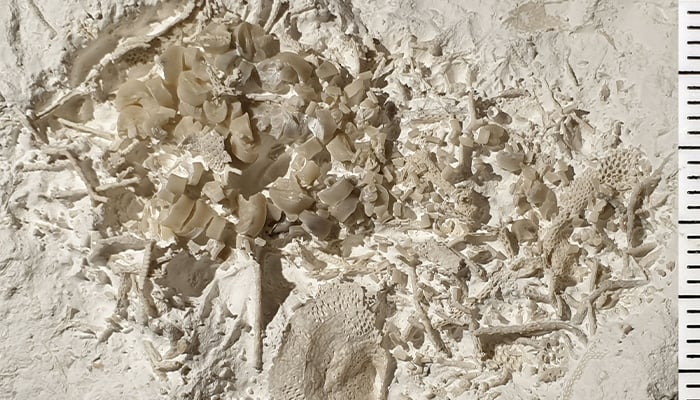
A remarkable discovery has been made in Denmark: prehistoric fossilized vomit dating back 66 million years, to the age when dinosaurs roamed the Earth. The Museum of East Zealand announced the find on Monday, crediting a local amateur fossil hunter, Peter Bennicke, for the discovery.
Bennicke made the find while walking along the Cliffs of Stevns, a UNESCO World Heritage Site located south of Copenhagen. Known for its rich Cretaceous-era chalk deposits, the site has yielded significant paleontological discoveries in the past.
The fossil in question was embedded in chalk and contained fragments of sea lilies, an ancient marine animal. After bringing the unusual fragments to the museum, experts confirmed that the fossil was the regurgitated remains of a predator from the late Cretaceous period.
Recent Posts

drive into the future with the 2025 subaru forester...
January 28, 2025
12:49 pm

want an suv with easy access and comfort for seniors? here’s how to get it!...
January 28, 2025
12:45 pm

explore the 2025 jeep compas: adventure awaits!...
January 28, 2025
12:54 pm

2025 jeep wrangler price one might not want to miss!...
January 28, 2025
12:57 pm
The vomit consists of at least two distinct species of sea lilies, which were likely consumed by a fish that regurgitated the indigestible parts. This rare find sheds light on prehistoric food chains and predator-prey relationships.
“This type of find… is considered very important when reconstructing past ecosystems because it provides important information about which animals were eaten by which,” the museum explained in a press release.
Paleontologist Jesper Milan described the discovery as “truly an unusual find,” emphasizing its significance in understanding ancient marine life.
“Sea lilies are not a particularly nutritious diet, as they consist mainly of calcareous plates held together by a few soft parts,” Milan said. “But here is an animal, probably some kind of fish, that 66 million years ago ate sea lilies that lived at the bottom of the Cretaceous sea and regurgitated the skeletal parts.”
This discovery not only deepens our understanding of prehistoric ecosystems but also highlights the scientific value of fossilized remains, no matter how unconventional they may seem. The Cliffs of Stevns continue to be a treasure trove for researchers, offering glimpses into the Earth’s ancient history.
Recent Posts

Former Liverpool star Mohamed Salah has been banned from driving in the United Kingdom for six months after failing to tell police who was driving his Rolls-Royce when it was caught speeding in Cheshire. The...
September 25, 2026
12:58 pm

need a new car? rent to own cars no credit check ...
September 25, 2026
12:50 pm

Nearly half of young people in England say they would trust artificial intelligence more than a human when checking whether a fact is accurate, according to a new Public First survey. The research, conducted among...
September 25, 2026
12:54 pm

celebrate the holidays in a new hyundai palisade...
September 25, 2026
12:36 pm

A case involving a three-year-old girl allegedly married to a 60-year-old man in Pakistan’s Balochistan province has triggered widespread outrage and a police investigation, with authorities also examining whether the arrangement is connected to the...
September 25, 2026
12:47 pm

explore surprisingly affordable luxury ram 1500...
September 25, 2026
12:44 pm

Finland and Sweden scrambled fighter jets to identify a group of Russian military aircraft over the Gulf of Finland in their first joint operational identification mission, as security concerns continue to rise around the Baltic...
September 25, 2026
12:36 pm

drive into the future with the 2025 subaru forester...
September 25, 2026
12:29 pm

Google is preparing to test a radical idea for artificial intelligence infrastructure: putting data centers in space. The company plans to launch a refrigerator-sized satellite carrying computing power equivalent to a single server as part...
September 25, 2026
12:29 pm

want an suv with easy access and comfort for seniors? here’s how to get it!...
September 25, 2026
12:16 pm

The U.S. Army Reserve is assessing whether it can make several support units available to U.S. Southern Command within the next four months, according to an internal Army message reviewed by CBS News. The planning...
September 25, 2026
12:21 pm

explore the 2025 jeep compas: adventure awaits!...
September 25, 2026
12:01 pm