

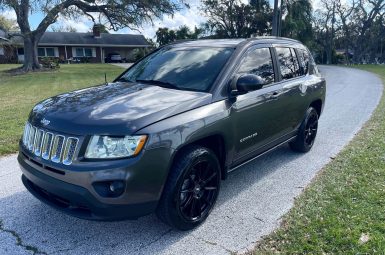
explore the 2025 jeep compas: adventure awaits!...
August 22, 2025
1:54 pm

want an suv with easy access and comfort for seniors? here’s how to get it!...
August 22, 2025
1:47 pm
Scientists Grow World’s First Lab-Made Human Skin with Blood Vessels, Raising Hope For New Treatments
August 22, 2025
14:05

Australian researchers at the University of Queensland have grown the world’s first lab-made human skin with a working blood supply. Built from reprogrammed stem cells, the skin mimics real human tissue more closely than any previous model. The breakthrough could revolutionize treatment for burns and chronic skin diseases, while also providing a better testing platform for new drugs.
For the first time, scientists in Australia have successfully grown fully functioning human skin in the lab—complete with blood vessels, nerves, hair follicles, pigmentation, and immune cells.
The breakthrough, led by researchers at the University of Queensland’s Frazer Institute, could transform how doctors treat burns, genetic skin disorders, and chronic conditions like psoriasis and atopic dermatitis. Unlike previous models, this lab-grown skin has its own blood supply, making it far more realistic and viable for medical use.
Recent Posts

2025 jeep wrangler price one might not want to miss!...
August 22, 2025
1:50 pm
drive into the future with the 2025 subaru forester...
August 22, 2025
1:52 pm

celebrate the holidays in a new hyundai palisade...
August 22, 2025
1:54 pm

need a new car? rent to own cars no credit check ...
August 22, 2025
1:47 pm
“This is the most life-like skin model that’s been developed anywhere in the world,” said Dr. Abbas Shafiee, a tissue engineering expert who co-led the study. “It will allow us to study diseases and test treatments more accurately.”
The team used a regenerative medicine approach that started with ordinary human skin cells.
One of the biggest limitations in skin research has been the lack of blood circulation. To solve this, the Queensland team engineered tiny blood vessels using the same stem cells. Once added, these vessels connected within the growing skin, allowing it to develop layers similar to natural human skin.
Recent Posts

explore surprisingly affordable luxury ram 1500...
August 22, 2025
1:36 pm

explore the 2025 jeep compas: adventure awaits!...
August 22, 2025
1:46 pm

want an suv with easy access and comfort for seniors? here’s how to get it!...
August 22, 2025
1:49 pm

2025 jeep wrangler price one might not want to miss!...
August 22, 2025
1:36 pm
The result: a three-dimensional tissue that grows like normal skin, complete with appendages such as hair follicles and pigmentation patterns.
Skin is the body’s largest organ, and yet medical science has struggled to replicate it. Patients with severe burns or chronic conditions often face limited treatment options. Artificial grafts exist, but they lack the complexity of real skin.
This new model changes that equation. It could help in:
Recent Posts

drive into the future with the 2025 subaru forester...
August 22, 2025
1:45 pm

celebrate the holidays in a new hyundai palisade...
August 22, 2025
1:43 pm

need a new car? rent to own cars no credit check ...
August 22, 2025
1:46 pm

explore surprisingly affordable luxury ram 1500...
August 22, 2025
1:48 pm
“Skin disorders can be difficult to treat, and it’s a real breakthrough to be able to provide hope for people living with chronic conditions,” said Professor Kiarash Khosrotehrani, a co-author of the study.
Previous lab-grown skin models existed, but they were often flat sheets without vascular networks. This limited their use for grafting and long-term studies.
The Queensland model stands out because:
In regenerative medicine, this represents a leap similar to when scientists first grew organoids of the brain, gut, or kidneys. Each milestone brings research closer to developing transplant-ready organs.
The project, which took six years to complete, is still in the experimental stage. Researchers will need to test how the skin behaves when grafted onto living organisms. Clinical use is likely years away, but the roadmap is clear:
If successful, the technology could eventually scale up to industrial biomanufacturing of human skin for hospitals worldwide.
Recent Posts
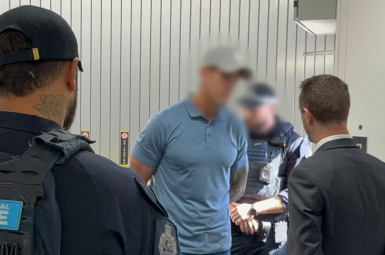
The arrest of Ben Roberts-Smith marks a historic moment for Australia’s military and legal system. Once celebrated as a national hero and recipient of the country’s highest military honour, Roberts-Smith now faces five counts of...
April 17, 2026
11:44 am

explore the 2025 jeep compas: adventure awaits!...
April 17, 2026
11:31 am

The California sheriff’s deputy dating app incident has quickly become one of those viral moments that feel almost scripted. In the middle of a high-stakes SWAT operation, a deputy in full tactical gear was seen...
April 17, 2026
11:38 am

want an suv with easy access and comfort for seniors? here’s how to get it!...
April 17, 2026
11:31 am

An “extreme travel” stunt has landed a YouTuber in serious legal trouble in India, while also reigniting global debate about protecting isolated indigenous communities. A foreign content creator is now facing up to five years...
April 17, 2026
11:31 am

2025 jeep wrangler price one might not want to miss!...
April 17, 2026
11:28 am

A new claim from Donald Trump is drawing global attention—and skepticism. Speaking outside the White House, Trump said Iran has agreed to return what he called its “nuclear dust” to the United States as part...
April 17, 2026
11:22 am

drive into the future with the 2025 subaru forester...
April 17, 2026
11:16 am

Dubai is preparing to take urban mobility off the ground—literally. The city has unveiled what it calls the world’s first fully operational air taxi station, a major step toward launching electric flying taxis for public...
April 17, 2026
11:17 am
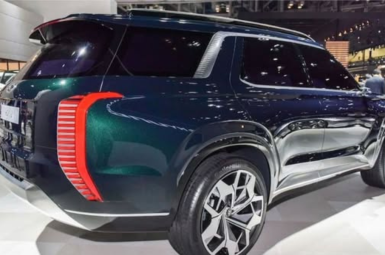
celebrate the holidays in a new hyundai palisade...
April 17, 2026
11:16 am

India is attempting one of the most consequential political overhauls in decades. At the center is a proposed constitutional amendment, the women’s reservation bill, that promises to reserve one-third of seats in Parliament and state...
April 17, 2026
11:12 am

need a new car? rent to own cars no credit check ...
April 17, 2026
11:08 am