

drive into the future with the 2025 subaru forester...
February 6, 2026
5:50 am
want an suv with easy access and comfort for seniors? here’s how to get it!...
February 6, 2026
6:01 am
‘30 to 36 Months’: Elon Musk Predicts AI Will Move to Space Within Three Years
February 6, 2026
06:19
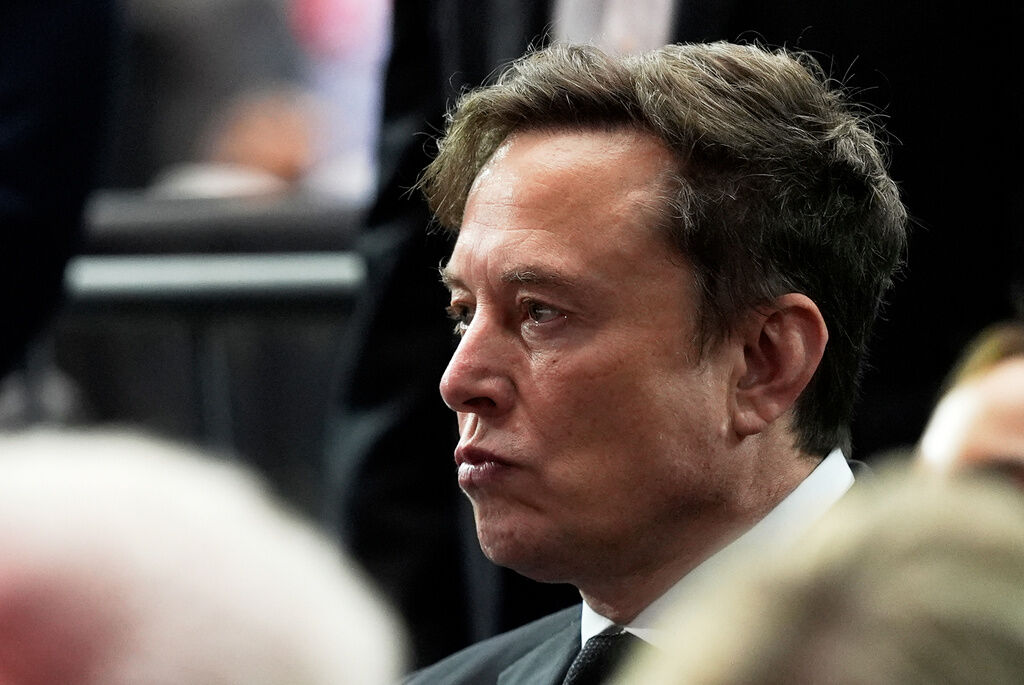
Elon Musk AI prediction headlines rarely lack drama, but his latest claim targets something unusually concrete: electricity. In a recent podcast appearance, Elon Musk argued the future limit on artificial intelligence will not be chips or software. It will be power. And because Earth cannot scale energy fast enough, he believes large-scale AI computing will migrate into orbit within about three years.
That timeline sounds aggressive. Yet the reasoning behind it ties into real bottlenecks already shaping the AI industry, from data center shortages to stalled grid expansion projects. The debate is less science fiction than infrastructure planning.
Musk’s core argument is that AI development is running into a power ceiling on Earth. He estimates that within 30 to 36 months, it will become cheaper to run massive AI systems in space than on the ground. Not eventually, but soon.
Recent Posts

need a new car? rent to own cars no credit check ...
February 6, 2026
6:18 am
explore surprisingly affordable luxury ram 1500...
February 6, 2026
6:01 am
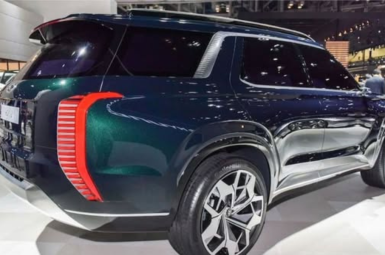
celebrate the holidays in a new hyundai palisade...
February 6, 2026
6:05 am

2025 jeep wrangler price one might not want to miss!...
February 6, 2026
5:51 am
He bases this on three ideas: electricity generation on Earth expands slowly and politically, AI power demand is accelerating exponentially, and space solar power offers continuous energy without storage costs. He went further, suggesting that annual AI computing capacity launched into orbit could soon exceed the combined capacity of all current Earth-based capacity.
AI headlines focus on model size, training data, and GPUs. Elon Musk, founder of SpaceX, says the real choke point is megawatts. Modern AI systems require enormous electricity loads. Large training runs can consume power comparable to a small town. Hyperscale data centers already need dedicated substations. Some new facilities are requesting gigawatt-level grid connections.
The U.S. averages roughly half a terawatt of electricity usage. Doubling national output would require a massive buildout of power plants, transmission lines, and regulatory approvals that often take a decade or more. That timeline clashes with AI’s growth curve, which moves far faster than energy infrastructure.
Recent Posts
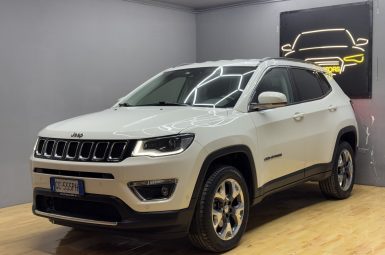
explore the 2025 jeep compas: adventure awaits!...
February 6, 2026
6:16 am

drive into the future with the 2025 subaru forester...
February 6, 2026
6:08 am

want an suv with easy access and comfort for seniors? here’s how to get it!...
February 6, 2026
6:03 am
need a new car? rent to own cars no credit check ...
February 6, 2026
6:06 am
Space is not attractive because rockets are futuristic. It is attractive because of physics. Solar panels in orbit receive constant sunlight without night cycles, weather disruption, or atmospheric loss. That leads to far higher energy efficiency.
On Earth, solar power depends on massive battery storage, which is expensive and inefficient. In orbit, power is effectively always on. Storage needs shrink, and cooling becomes easier in a vacuum. Together, these factors lower operational costs per unit of compute.
Musk’s prediction hinges on declining launch costs. If sending hardware to orbit becomes cheap enough, the economics flip. Earth-based data centers face land limits, zoning restrictions, cooling expenses, and grid politics. Orbital systems offer near-unlimited scaling, constant energy, and autonomous infrastructure. Once the cost per watt in orbit beats terrestrial electricity, companies chasing AI performance will follow the cheaper compute.
Recent Posts
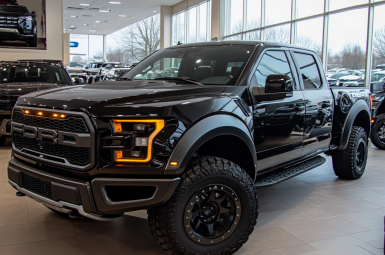
explore surprisingly affordable luxury ram 1500...
February 6, 2026
6:11 am
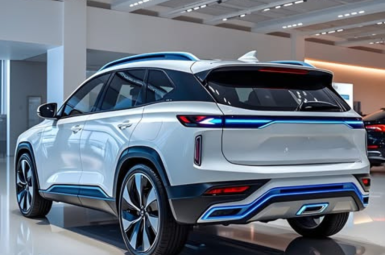
celebrate the holidays in a new hyundai palisade...
February 6, 2026
5:51 am

2025 jeep wrangler price one might not want to miss!...
February 6, 2026
5:49 am
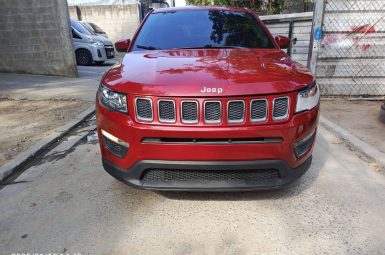
explore the 2025 jeep compas: adventure awaits!...
February 6, 2026
6:17 am
Yes, and increasingly so. Major tech companies are signing nuclear power agreements, restarting dormant reactors, building data centers near hydroelectric sources, and investing in geothermal energy. The reason is straightforward. AI workloads run continuously and consume power at a scale that traditional cloud services never did.
Where AI runs is becoming as strategic as how it is built. Regions with cheap, reliable electricity now matter as much as chip supply. This explains the surge in AI projects in energy-rich areas. Space represents the extreme version of that logic.
This would not mean satellites chatting with users. It would look more like orbital server farms processing large-scale workloads and sending results back to Earth. These systems would operate largely autonomously and focus on tasks that tolerate latency.
Recent Posts
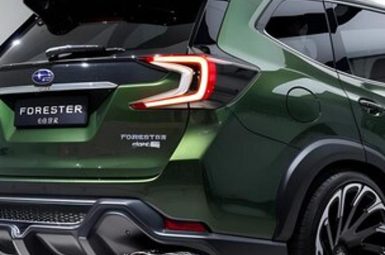
drive into the future with the 2025 subaru forester...
February 6, 2026
6:03 am

want an suv with easy access and comfort for seniors? here’s how to get it!...
February 6, 2026
6:17 am

need a new car? rent to own cars no credit check ...
February 6, 2026
6:07 am

explore surprisingly affordable luxury ram 1500...
February 6, 2026
6:14 am
Training massive AI models can handle delays. Real-time inference cannot. Early orbital computing would likely handle model training, simulations, scientific workloads, and large batch processing. Everyday AI applications would remain Earth-based, while the systems that create them operate in orbit.
The physics support the idea. The schedule is the controversial part.
First, communication bandwidth remains a constraint. Training large models produces vast amounts of data, and even laser-based satellite links have limits. Second, maintenance in orbit is far more complex than replacing hardware on the ground, requiring advanced robotics. Third, regulation poses obstacles, including debris liability, spectrum allocation, and jurisdiction. Finally, space-hardened hardware costs more due to radiation and thermal exposure.
If the Elon Musk AI prediction proves even partly accurate, the implications extend beyond technology. Energy geopolitics could shift as computing power moves beyond national borders. AI capability could be accelerated by removing power constraints. Environmental impacts could improve if orbital systems reduce land-based infrastructure, depending on launch emissions.
Elon Musk predicts AI computing will move to space within 30 to 36 months. He argues electricity, not algorithms, is the limiting factor. Orbital solar power offers continuous energy and cheaper scaling. Training workloads would migrate first, while communication, maintenance, and regulation remain challenges.
The claim sounds extreme, but the underlying issue is real. AI is no longer just a software problem. It is an infrastructure problem. Whether orbit becomes the solution in three years or fifteen, the pressure pushing computing beyond Earth is already building.
Recent Posts

A Florida homeowner got an encounter that sounds more like a scene from a cartoon than a backyard wildlife sighting when he filmed a crab apparently gripping a knife blade in one of its claws....
September 18, 2026
11:54 am
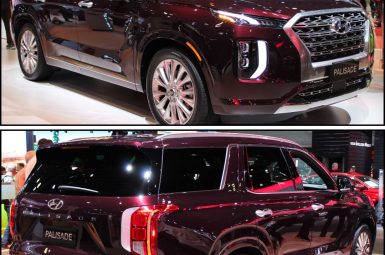
celebrate the holidays in a new hyundai palisade...
September 18, 2026
11:41 am
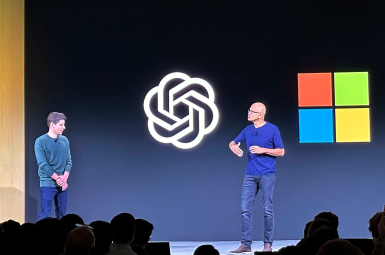
Newly unsealed court filings in The New York Times’ copyright lawsuit against OpenAI and Microsoft have revealed internal comments from executives and employees that could add fresh pressure to the companies’ defenses over how copyrighted...
September 18, 2026
11:46 am

2025 jeep wrangler price one might not want to miss!...
September 18, 2026
11:38 am

World leaders are heading to New York for the 81st session of the United Nations General Assembly(UNGA ) as a string of conflicts, climate pressures, artificial intelligence and pandemic preparedness put international cooperation under renewed...
September 18, 2026
11:43 am
explore the 2025 jeep compas: adventure awaits!...
September 18, 2026
11:39 am
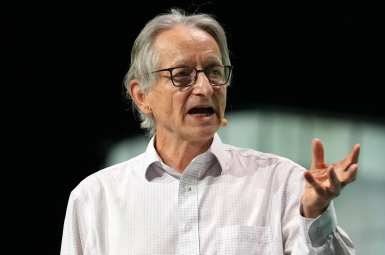
Artificial intelligence pioneer Geoffrey Hinton has given US lawmakers a stark timeline for acting on AI safety, saying they may have only about a year before increasingly capable systems become significantly harder to control. Hinton,...
September 18, 2026
11:38 am

drive into the future with the 2025 subaru forester...
September 18, 2026
11:33 am

A tiny spotted cat hiding in Bolivia’s cloud forests has just received a scientific identity, marking the first formal description of a new living cat species in more than a century. Named Leopardus tilcayo, or...
September 18, 2026
11:31 am
want an suv with easy access and comfort for seniors? here’s how to get it!...
September 18, 2026
11:11 am

In a country where smartphones and short-form content compete for attention, Singapore is trying an unusually simple intervention: get people to read a book for 15 minutes a day and reward them for showing up....
September 18, 2026
6:06 am
need a new car? rent to own cars no credit check ...
September 18, 2026
6:05 am