


2025 jeep wrangler price one might not want to miss!...
March 17, 2026
4:11 am

need a new car? rent to own cars no credit check ...
March 17, 2026
4:03 am
A Failed Experiment Just Accidentally Revolutionized How We Make Medicine
March 17, 2026
04:15
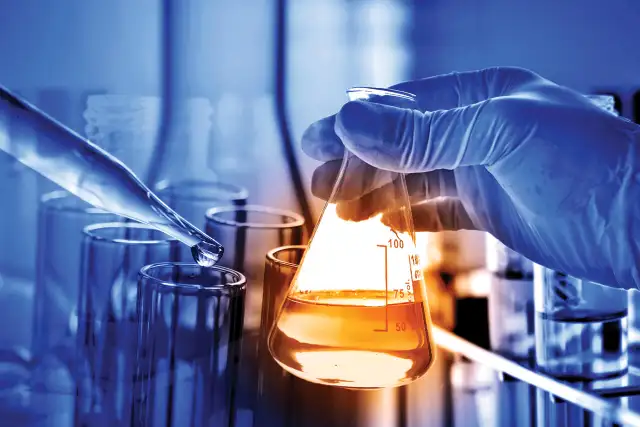
Some of science’s greatest breakthroughs, penicillin, X-rays, and Viagra, were born from mistakes. Now, a team at the University of Cambridge has added another entry to that list: a light-powered chemical reaction that could fundamentally change how pharmaceutical companies design and manufacture drugs. And it happened because an experiment went wrong.
Researchers at the University of Cambridge, publishing their findings in March 2026, have developed a new method to modify complex drug molecules using nothing more than an LED lamp, as reported by Phys.org. The technique triggers a self-sustaining chain reaction that forges new carbon-carbon bonds, one of the most fundamental building blocks of organic chemistry, under mild laboratory conditions, without the toxic or expensive metal catalysts that current methods require.
The discovery emerged from what the team initially considered a failed experiment. When a planned reaction did not produce the expected result, the researchers noticed an unexpected molecular transformation had occurred instead. Rather than discarding the anomaly, they investigated and found a reaction pathway that no one had deliberately designed or predicted.
Recent Posts

explore the 2025 jeep compas: adventure awaits!...
March 17, 2026
4:11 am

celebrate the holidays in a new hyundai palisade...
March 17, 2026
4:13 am

want an suv with easy access and comfort for seniors? here’s how to get it!...
March 17, 2026
3:52 am

drive into the future with the 2025 subaru forester...
March 17, 2026
4:09 am
The implications are significant. Carbon-carbon bond formation is the cornerstone of drug synthesis. Nearly every pharmaceutical compound relies on these bonds, and the conventional methods to create them often involve palladium, platinum, or other rare and toxic metals that generate hazardous waste and drive up manufacturing costs.
This discovery arrives at a moment when the pharmaceutical industry is under intense pressure to reduce both costs and environmental impact.
The Cambridge discovery is a case study in what researchers call “serendipity bias,” the tendency for funding bodies and corporate R&D departments to undervalue unexpected findings. In a system optimized for predictable milestones and quarterly deliverables, the kind of open-ended experimentation that produced this breakthrough is increasingly rare and underfunded.
Recent Posts

explore surprisingly affordable luxury ram 1500...
March 17, 2026
3:46 am

2025 jeep wrangler price one might not want to miss!...
March 17, 2026
4:07 am

need a new car? rent to own cars no credit check ...
March 17, 2026
3:48 am

explore the 2025 jeep compas: adventure awaits!...
March 17, 2026
3:56 am
As the Cambridge team noted, the reaction pathway they discovered was not in any textbook and would not have been predicted by computational chemistry models. It required human observation of an anomaly and the scientific curiosity to pursue it, qualities that algorithms, for all their power, cannot yet replicate.
If the technique scales successfully, it could lower the manufacturing cost of existing drugs and enable the synthesis of entirely new molecular structures that were previously too expensive or technically difficult to produce. For patients, that translates to potentially cheaper medications and access to novel therapies that current chemistry cannot efficiently deliver.
The Cambridge team is now working with pharmaceutical partners to test the method’s scalability on industrial equipment. The key question is whether the light-driven chain reaction can maintain its efficiency at volumes thousands of times larger than a laboratory flask. Early indications are promising; the reaction’s self-sustaining nature means it does not require continuous energy input, which is unusual for photochemical processes.
Recent Posts

celebrate the holidays in a new hyundai palisade...
March 17, 2026
4:07 am

want an suv with easy access and comfort for seniors? here’s how to get it!...
March 17, 2026
3:46 am

drive into the future with the 2025 subaru forester...
March 17, 2026
4:04 am

explore surprisingly affordable luxury ram 1500...
March 17, 2026
3:49 am
If successful, the method could be integrated into existing pharmaceutical manufacturing pipelines within three to five years, according to the researchers. In an industry that rarely moves quickly, that timeline would be remarkably fast, fitting, perhaps, for a discovery that was never supposed to happen in the first place.
What did Cambridge scientists discover? A way to modify drug molecules using light from an LED lamp instead of toxic metal catalysts, creating carbon-carbon bonds through a self-sustaining chain reaction under mild conditions.
Why is this important for medicine? It could reduce the cost and environmental impact of drug manufacturing while potentially enabling the creation of new drugs that current methods cannot efficiently produce.
Was this discovery intentional? No. It emerged from a failed experiment. The researchers noticed an unexpected molecular transformation and investigated it, discovering a reaction pathway not predicted by existing chemistry models.
Recent Posts

New York — In a dazzling display of global admiration, a coalition of prominent Indian-American community organizations united to celebrate the birthday of Indian Prime Minister Narendra Modi, broadcasting a special birthday greeting on a...
September 17, 2026
12:39 pm

2025 jeep wrangler price one might not want to miss!...
September 17, 2026
12:37 pm

Scientists have taken a striking step toward decoding visual information from the brain by reconstructing short movies using neural activity recorded from mice. Researchers at University College London (UCL) used signals from individual neurons in...
September 17, 2026
12:25 pm

need a new car? rent to own cars no credit check ...
September 17, 2026
11:55 am

The 2026 US midterm elections are approaching, with voters across the country set to choose members of Congress as well as candidates for a wide range of state and local offices. The general election will...
September 16, 2026
12:27 pm

explore the 2025 jeep compas: adventure awaits!...
September 16, 2026
12:02 pm

Earth’s surface is dominated by oceans, rivers and ice, but some of the planet’s water may be stored in a far less accessible place: nearly 2,900 kilometers beneath our feet. A new study published in...
September 16, 2026
12:23 pm

celebrate the holidays in a new hyundai palisade...
September 16, 2026
11:54 am

Artificial intelligence is increasingly being used to automate legitimate tasks, but Spain’s data protection regulator says it has now received a report of an incident in which an AI agent was allegedly used to carry...
September 16, 2026
12:13 pm

want an suv with easy access and comfort for seniors? here’s how to get it!...
September 16, 2026
12:08 pm
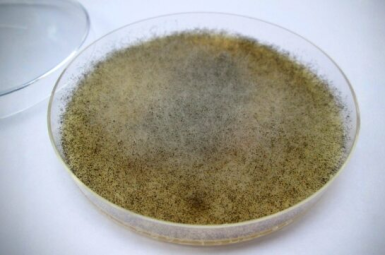
A fungus living in the human gut may have an unexpected role: helping the intestine withstand damage caused by radiation. Chinese researchers have identified Mucor racemosus, a filamentous fungus that can live in the gut,...
September 16, 2026
12:11 pm

drive into the future with the 2025 subaru forester...
September 16, 2026
11:42 am